
Massachusetts Rejects Prosecutor for Parole Board, Igniting Debate Over Violent Crime and Early Releases
Vote against prosecutor Vincent DeMore exposes deep divides over parole, public safety, and early releases of violent offenders.

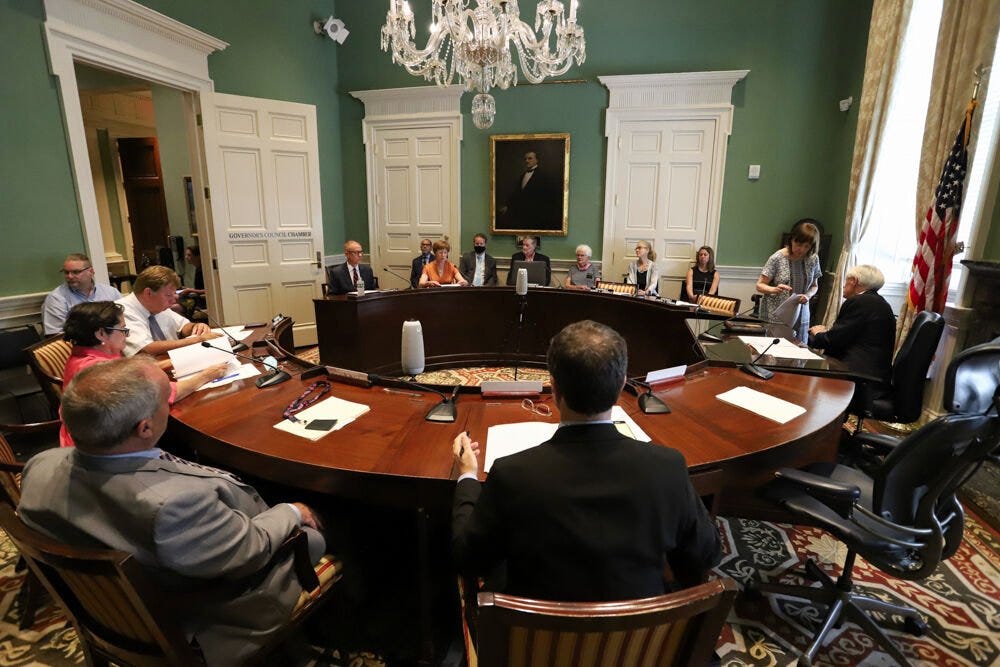
In Massachusetts politics, where decisions made on Beacon Hill often ripple through neighborhoods from Boston to the Berkshires, a recent vote by the Governor’s Council has crystallized a long-simmering tension over how the state handles those convicted of violent crimes. On May 20, 2026, the eight-member elected body turned down Governor Maura Healey’s nominee for the Massachusetts Parole Board, attorney Vincent DeMore, in a narrow 4-3 decision. DeMore, who spent 12 years as a prosecutor in the Suffolk County District Attorney’s Office before transitioning to criminal defense work and serving as special victims’ counsel, brought a resume that included firsthand experience with both sides of the courtroom. His rejection, coming after weeks of public hearings and lobbying on both sides, has left many residents wondering aloud whether the state’s approach to parole prioritizes rehabilitation at the expense of immediate community protection.
The vote unfolded against a backdrop of heightened public unease. Just days earlier, news broke of another incident involving a parolee that underscored the stakes. Tyler E. Brown IV, released early from state prison in May 2025 after serving roughly three and a half years of a sentence for firing at Boston police officers in 2020, was arrested in connection with a chaotic shooting along Memorial Drive in Cambridge. Authorities said Brown, who had a documented history of violence and recent psychiatric treatment, allegedly fired dozens of rounds, injuring two bystanders in what police described as a preventable escalation. The case quickly became a flashpoint, with families and local officials questioning how someone with that record had been deemed ready for supervised freedom so soon after his original offense.
This was not an isolated event. Over the past year and a half, the Parole Board has approved parole for a significant number of individuals serving life sentences for first-degree murder—39 out of 51 cases reviewed since late 2024, according to public records and statements from elected officials tracking the board’s decisions. Many of these releases stem from a 2024 Supreme Judicial Court ruling that effectively opened the door for “emerging adults” convicted of crimes committed between ages 18 and 20, ruling out life without parole in those instances. The board’s work, by design, involves weighing an inmate’s rehabilitation progress, risk factors, and the potential for safe reintegration against the gravity of past harm. Yet for some observers, the pace and outcomes have raised alarms about whether public safety is receiving enough weight in those calculations.
The Governor’s Council, a uniquely Massachusetts institution tasked with approving or rejecting the governor’s picks for judges, parole board members, and other key posts, has historically served as a check on executive appointments. In this instance, opposition to DeMore centered on concerns that his prosecutorial background might tilt the seven-member Parole Board too heavily toward caution in granting releases. Councilor Mara Dolan, who led much of the questioning during hearings, publicly voiced worries that DeMore could prove overly restrictive, potentially prioritizing denial of parole in ways that overlooked opportunities for supervised release. Other critics, including mental health advocates and criminal justice reformers who testified, argued that the board already included sufficient voices from law enforcement and prosecution circles. They called instead for nominees with deeper expertise in addiction treatment, trauma-informed care, and reentry programming—skills they believe are essential for evaluating whether someone can truly change after decades behind bars.
Governor Healey, for her part, mounted a vigorous defense of her nominee. In letters and public appearances leading up to the vote, she highlighted DeMore’s multifaceted career: not only his time prosecuting serious cases but also his defense work and direct advocacy for victims. She described him as someone who understood the criminal justice system “from indictment through appeal” and who could bring a balanced perspective that accounted for both accountability and the possibility of redemption. Healey’s push reflected a broader philosophy that has guided her administration’s criminal justice policies—one that emphasizes evidence-based reforms while acknowledging the need for vigilance. Yet the council’s decision handed her a rare public setback, one that has amplified calls from across the political spectrum for greater transparency and perhaps a recalibration of how parole decisions are made.
For many Massachusetts families, the frustration runs deeper than any single nomination. In communities across the state, residents speak of a growing sense that the system sometimes appears more attuned to the needs of those who have broken the law than to those who have suffered because of it. Victims’ advocates point to parole hearings where families must relive trauma, only to see decisions that feel disconnected from the everyday realities of street-level safety. Law enforcement leaders, including district attorneys from urban and suburban counties alike, have echoed these sentiments in recent months, arguing that parole should not become a routine pathway for individuals whose records suggest ongoing danger. They cite data showing that while overall recidivism rates in Massachusetts hover around 26 to 33 percent within three years of release—depending on the cohort and whether technical violations are included—certain high-risk categories, particularly those involving violent histories, warrant stricter scrutiny.
At the same time, it is important to examine the fuller picture of Massachusetts’ criminal justice landscape, which stands out nationally for its relatively progressive stance and measurable successes. The state boasts one of the lowest incarceration rates in the country, a trend that predates the pandemic but accelerated with the landmark 2018 criminal justice reform package signed into law under then-Governor Charlie Baker. That legislation expanded earned-time credits for inmates who complete recidivism-reduction programs, adjusted bail procedures to consider ability to pay, and reduced some mandatory minimum sentences for nonviolent offenses. Proponents, including a broad coalition of legislators, researchers, and community organizations, credit these changes with helping drive down prison populations without a corresponding spike in crime. Indeed, statewide violent crime rates have continued a long-term decline, with homicides dropping more than 11 percent in 2024 to 132 incidents, alongside reductions in robberies and aggravated assaults. Overall property crime has followed suit, placing Massachusetts well below national averages.
Reform advocates argue that these outcomes validate a smarter, more nuanced approach to parole and sentencing. They point to studies from the Department of Correction showing that inmates who receive substance abuse treatment, educational programming, and housing support upon release recidivate at significantly lower rates—sometimes as low as 7 to 8 percent in targeted cohorts—compared to those without such resources. Mental health professionals and reentry specialists emphasize that many long-term inmates, especially those convicted in their late teens or early twenties, demonstrate genuine maturation and remorse after years of reflection and programming. Denying them a supervised path back to society, they contend, ignores decades of criminological research suggesting that age, treatment, and time behind bars can fundamentally alter risk profiles. Moreover, maintaining high incarceration levels carries substantial fiscal costs—tens of millions annually in state budgets—that could otherwise fund prevention, victim services, or community policing initiatives.
Yet these arguments do not always resonate with those who have lost loved ones to violence or who see parolees reoffend in their own backyards. Public safety advocates, including some Republican candidates eyeing higher office, have seized on the recent string of releases as evidence that ideology occasionally overrides pragmatism on Beacon Hill. They call for Parole Board members who bring prosecutorial or law enforcement experience precisely because such backgrounds foster a healthy skepticism about self-reported rehabilitation. In their view, the board’s current composition lacks sufficient counterbalance to what they describe as a rehabilitative tilt, one that may undervalue the permanent scars left on victims and the ripple effects of crime on entire neighborhoods. High-profile failures, even if statistically rare, erode public confidence and fuel perceptions that the system is lenient toward those who least deserve it.
The debate also carries echoes of Massachusetts’ own history with parole controversies. Decades ago, the Willie Horton case—a furlough program gone tragically wrong—shaped national conversations about crime and punishment, leaving a lingering caution among policymakers wary of being labeled soft on offenders. Today’s discussions unfold in a different era, one shaped by data-driven reforms and a recognition that mass incarceration has its own societal costs, including racial disparities in sentencing and reentry barriers that can perpetuate cycles of poverty and crime. Still, the tension persists: how to honor the principles of second chances while ensuring that no innocent person pays the price for a miscalculated release.
Looking ahead, the Parole Board’s workload remains heavy. With thousands of inmates eligible each year, decisions must balance individual circumstances against collective risk. Supporters of the current direction highlight the board’s mission statement, which explicitly frames parole as a tool for promoting public safety through conditional, supervised release rather than automatic punishment. They note that parole officers provide ongoing monitoring, drug testing, and support services that can catch problems before they escalate. Critics counter that supervision alone cannot compensate for flawed initial assessments, and they urge greater involvement from victims’ families in hearings, more public disclosure of decision rationales, and perhaps legislative tweaks to ensure the board reflects a wider array of perspectives.
Ultimately, the rejection of Vincent DeMore’s nomination serves as a reminder that parole policy sits at the intersection of compassion and caution, data and human judgment. Massachusetts residents, many of whom pride themselves on the state’s reputation for fairness and innovation, are right to demand a system that learns from mistakes without abandoning its commitment to evidence over emotion. Whether through future appointments, enhanced training requirements, or targeted reforms to hearing processes, the conversation on Beacon Hill will likely continue. In the meantime, families navigating the aftermath of crime—whether as victims or as relatives of those incarcerated—deserve more than partisan talking points. They need policies grounded in rigorous analysis, transparent accountability, and an unwavering focus on preventing the next tragedy while preserving pathways for those who have earned a measured return to society. The challenge lies in threading that needle without losing sight of the very real human consequences on either side of the prison walls. As communities watch and wait, the hope remains that decisions made in hearing rooms and council chambers will reflect not just philosophical divides but the shared goal of safer streets for everyone living in the Commonwealth.

Support my run for State Representative - 9th Bristol District in Massachusetts